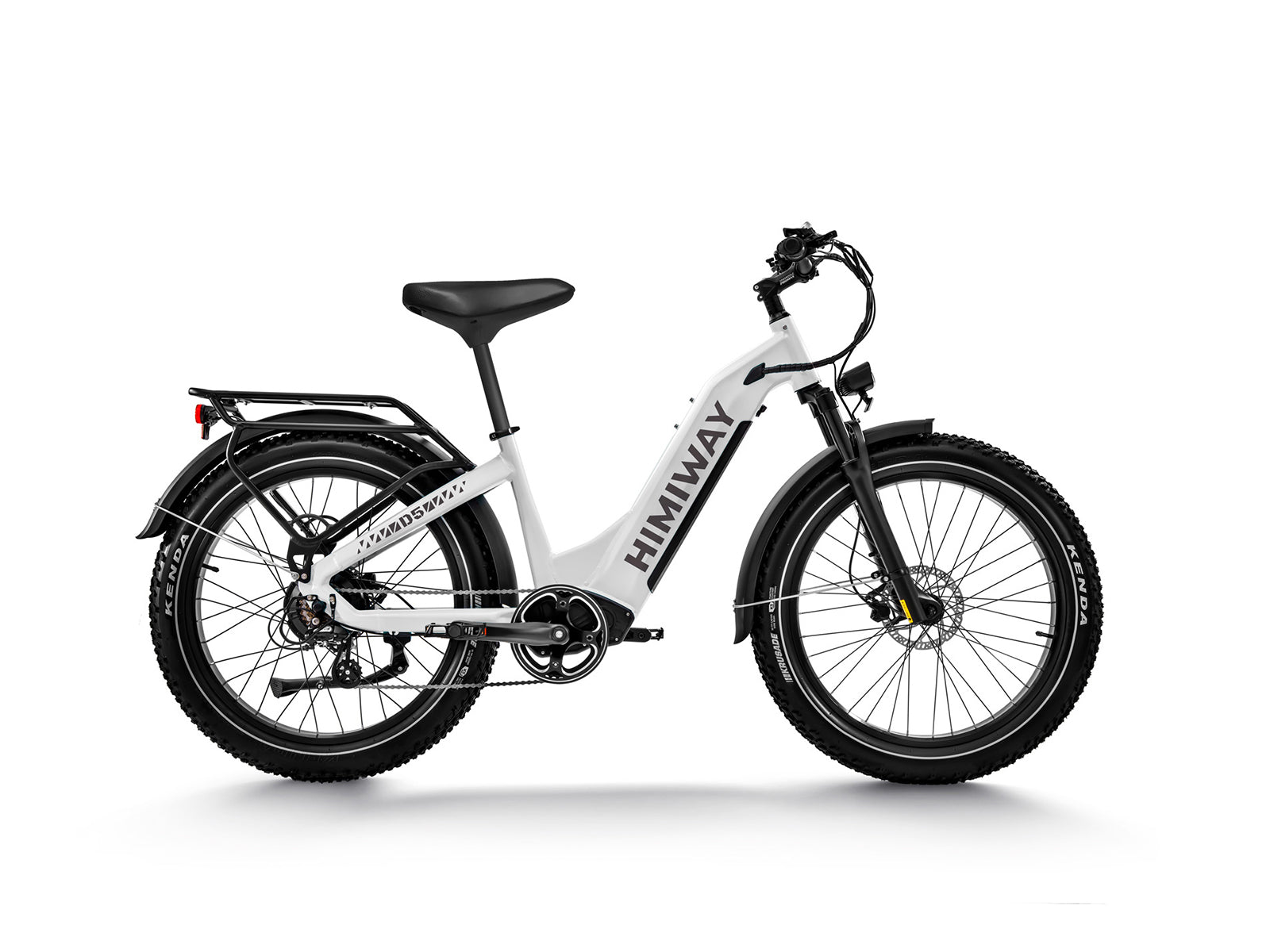
Every buy button names the actual retailer or manufacturer it leads to — for example “Check price at ADO” — so you know who gets the click before you make it.
Step-through fat-tyre bike with a torque sensor, 85Nm and a 1040Wh battery
£1,399
Applied automatically when you use our Buy button. Only needed if you go direct:
BESTEBIKESUK
£50 off at the official Cyrusher UK store. Our Buy buttons apply it for you — you should see it come off in the basket before you pay. Verified at checkout, 31 August 2026.
£50 off — applied for you
Applied automatically when you use our Buy button. Only needed if you go direct:
BESTEBIKESUK
£50 off at the official Cyrusher UK store. Our Buy buttons apply it for you — you should see it come off in the basket before you pay. Verified at checkout, 31 August 2026.
Applied automatically when you use our Buy button. Only needed if you go direct:
BESTEBIKESUK
£50 off at the official Cyrusher UK store. Our Buy buttons apply it for you — you should see it come off in the basket before you pay. Verified at checkout, 31 August 2026.
£50 off — applied for you
Applied automatically when you use our Buy button. Only needed if you go direct:
BESTEBIKESUK
£50 off at the official Cyrusher UK store. Our Buy buttons apply it for you — you should see it come off in the basket before you pay. Verified at checkout, 31 August 2026.
Step-through fat-tyre with rare hybrid cadence + torque sensor — 95Nm, 780Wh, easy mount
£1,199
Applied automatically when you use our Buy button. Only needed if you go direct:
BESTEBIKESUK
£50 off at the official Cyrusher UK store. Our Buy buttons apply it for you — you should see it come off in the basket before you pay. Verified at checkout, 31 August 2026.
£50 off — applied for you
Applied automatically when you use our Buy button. Only needed if you go direct:
BESTEBIKESUK
£50 off at the official Cyrusher UK store. Our Buy buttons apply it for you — you should see it come off in the basket before you pay. Verified at checkout, 31 August 2026.
27.5in full-suspension trail bike with 87Nm, a 720Wh battery and a torque sensor
£1,799
Applied automatically when you use our Buy button. Only needed if you go direct:
BESTEBIKESUK
£50 off at the official Cyrusher UK store. Our Buy buttons apply it for you — you should see it come off in the basket before you pay. Verified at checkout, 31 August 2026.
£50 off — applied for you
Applied automatically when you use our Buy button. Only needed if you go direct:
BESTEBIKESUK
£50 off at the official Cyrusher UK store. Our Buy buttons apply it for you — you should see it come off in the basket before you pay. Verified at checkout, 31 August 2026.
Applied automatically when you use our Buy button. Only needed if you go direct:
BESTEBIKESUK
£50 off at the official Cyrusher UK store. Our Buy buttons apply it for you — you should see it come off in the basket before you pay. Verified at checkout, 31 August 2026.
£50 off — applied for you
Applied automatically when you use our Buy button. Only needed if you go direct:
BESTEBIKESUK
£50 off at the official Cyrusher UK store. Our Buy buttons apply it for you — you should see it come off in the basket before you pay. Verified at checkout, 31 August 2026.
Full-suspension mountain eBike with switchable torque/cadence sensing and a removable 720Wh LG battery
£1,399
Applied automatically when you use our Buy button. Only needed if you go direct:
BESTEBIKESUK
£50 off at the official Cyrusher UK store. Our Buy buttons apply it for you — you should see it come off in the basket before you pay. Verified at checkout, 31 August 2026.
£50 off — applied for you
Applied automatically when you use our Buy button. Only needed if you go direct:
BESTEBIKESUK
£50 off at the official Cyrusher UK store. Our Buy buttons apply it for you — you should see it come off in the basket before you pay. Verified at checkout, 31 August 2026.
Full-suspension step-through fat bike with a 960Wh battery and 85Nm torque-sensing hub motor
£1,199
Applied automatically when you use our Buy button. Only needed if you go direct:
BESTEBIKESUK
£50 off at the official Cyrusher UK store. Our Buy buttons apply it for you — you should see it come off in the basket before you pay. Verified at checkout, 31 August 2026.
£50 off — applied for you
Applied automatically when you use our Buy button. Only needed if you go direct:
BESTEBIKESUK
£50 off at the official Cyrusher UK store. Our Buy buttons apply it for you — you should see it come off in the basket before you pay. Verified at checkout, 31 August 2026.
Step-through full-sus fat bike with Bafang 95Nm hub, 1040Wh battery and 4-piston brakes
£2,299
Applied automatically when you use our Buy button. Only needed if you go direct:
BESTEBIKESUK
£50 off at the official Cyrusher UK store. Our Buy buttons apply it for you — you should see it come off in the basket before you pay. Verified at checkout, 31 August 2026.
£50 off — applied for you
Applied automatically when you use our Buy button. Only needed if you go direct:
BESTEBIKESUK
£50 off at the official Cyrusher UK store. Our Buy buttons apply it for you — you should see it come off in the basket before you pay. Verified at checkout, 31 August 2026.
Step-through longtail cargo eBike with a 95Nm torque-sensing hub motor and an 811Wh battery
£1,499
Applied automatically when you use our Buy button. Only needed if you go direct:
BESTEBIKESUK
£50 off at the official Cyrusher UK store. Our Buy buttons apply it for you — you should see it come off in the basket before you pay. Verified at checkout, 31 August 2026.
£50 off — applied for you
Applied automatically when you use our Buy button. Only needed if you go direct:
BESTEBIKESUK
£50 off at the official Cyrusher UK store. Our Buy buttons apply it for you — you should see it come off in the basket before you pay. Verified at checkout, 31 August 2026.
Full-suspension 26x4.0 fat bike with 95Nm hub, 811Wh battery, torque sensor and 100km range
£1,399
Applied automatically when you use our Buy button. Only needed if you go direct:
BESTEBIKESUK
£50 off at the official Cyrusher UK store. Our Buy buttons apply it for you — you should see it come off in the basket before you pay. Verified at checkout, 31 August 2026.
£50 off — applied for you
Applied automatically when you use our Buy button. Only needed if you go direct:
BESTEBIKESUK
£50 off at the official Cyrusher UK store. Our Buy buttons apply it for you — you should see it come off in the basket before you pay. Verified at checkout, 31 August 2026.
Higher-speed modes are not for UK public roads or cycle paths. Use them only where that exact bike, configuration and use are lawful; being abroad or on private land does not automatically make them lawful.
High-step full-sus fat bike with Bafang 95Nm hub, 1040Wh battery, DNM air shock and turn signals
£2,299
Applied automatically when you use our Buy button. Only needed if you go direct:
BESTEBIKESUK
£50 off at the official Cyrusher UK store. Our Buy buttons apply it for you — you should see it come off in the basket before you pay. Verified at checkout, 31 August 2026.
£50 off — applied for you
Applied automatically when you use our Buy button. Only needed if you go direct:
BESTEBIKESUK
£50 off at the official Cyrusher UK store. Our Buy buttons apply it for you — you should see it come off in the basket before you pay. Verified at checkout, 31 August 2026.
eBike glossary — electric bike jargon decodedUnderstand motor types, sensors, watt-hours and UK rules.?
New to eBikes? Pop this quick glossary open whenever a term sounds unfamiliar. We cover the motor tech, how to read torque and battery specs, plus the essentials for staying UK road legal.
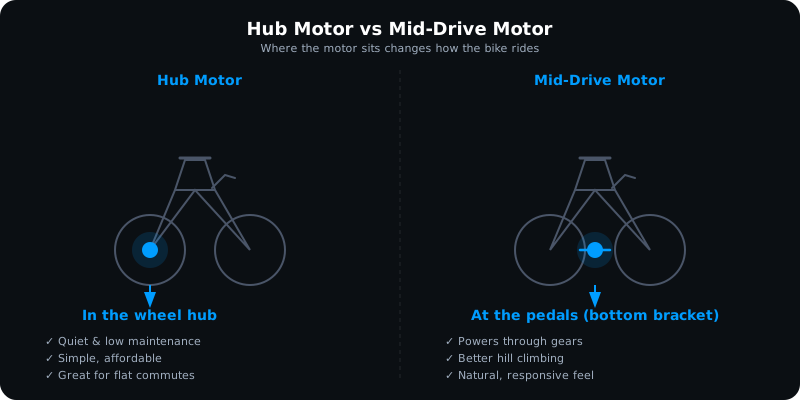
Hub drive motors
The motor sits in one wheel hub — usually the rear — and drives that wheel without sending motor torque through the chain and cassette. Price, noise, maintenance and hill performance still vary by motor, controller and bike.
Mid-drive motors
Mounted near the bottom bracket — the crank area where the pedals meet — a mid-drive sends assistance through the bicycle gears. That can help on sustained climbs, while also adding motor load to the chain and cassette.
Cadence sensor
A cadence sensor detects crank movement or rotation speed. The controller then applies its programmed response for the selected assist level; cadence sensing does not inherently mean full power, and ramp-up varies by bike.
Torque sensor
A torque sensor measures force in the drivetrain so the controller can vary assistance in response. It often supports a more proportional feel, but calibration, motor tuning and assist mode still determine the result.
Torque & cadence (both)
Some listings record both torque and cadence inputs, including the Cyrusher Roam and Himiway D5 2.0. “Both” may mean blended or selectable behaviour, so check how the exact controller uses each sensor.
Battery capacity (Wh)
Watt-hours compare nominal stored energy. A higher figure can support more range, but usable capacity, speed, assistance, hills, load, weather, tyres, efficiency and battery condition all affect the ride.
Motor torque (Nm)
Newton metres describe torque, but published figures may use different measurement points and methods. Compare motor position, gearing, wheel size, bike weight and route rather than treating one Nm threshold as a performance guarantee.
EAPC road rules
Great Britain and Northern Ireland have separate official guidance. Their current headline conditions include working pedals, no more than 250 W maximum continuous rated output, required markings, no motor propulsion above 15.5 mph, and any applicable throttle approval.
We may earn a small commission if you buy via our link — at no extra cost to you. This helps keep Best eBikes UK running.
Buying notes for UK eBikes
Key specs and practical extras for most everyday riders.
What many riders need
Range around 100 km+ (60 mi) and batteries ≥ 500 Wh.
≥ 80 Nm torque for steep hills and quick starts.
Integrated theft deterrents, GPS tracking and sturdy locks.
Full mudguards, rear rack and upright bars for commuter comfort.
Torque or cadence sensors with a clear, daylight-readable display.
Nice to have
Automatic gear shifting or stepless hubs for city stop/start riding.
Step-through frames, mirrors and controllers that remember your last PAS level.
Where each style excels
Hub-motor commuters apply motor torque at the wheel; a stated watt or Nm figure alone does not predict hill performance.
Mid-drive bikes can use the bicycle gears on climbs, while gearing, load, controller tuning and rider input still determine the result.
Cargo & fat-tyre builds trade extra grip and carrying ability for more weight and rolling resistance.
Brands & legality
We currently track ADO, Cyrusher, Engwe, Fiido, Himiway, and Jansno. We add brands once they are on sale in the market with published spec sheets we can check against.
For ordinary-cycle treatment in Great Britain, confirm the exact bike has working pedals, required markings, no more than 250 W maximum continuous rated output, no motor propulsion above 15.5 mph (25 km/h), and any approval required for its throttle. Check the current GOV.UK rules.
How we pick eBikes
Every model on Best eBikes UK is checked by hand before it appears in the comparison grid.
Record the stated continuous motor rating and assist cut-off, while reminding buyers to verify markings, throttle approval and the exact configuration sold in their market.
Cross-check torque, battery size and weight against official spec sheets and retailer listings.
Highlight commuter-friendly extras such as racks, lights, guards and hydraulic brakes.
Show the stored price and stock check date so you can judge freshness before visiting the retailer.
New releases are reviewed alongside rider feedback and manufacturer updates before we add them.
What’s next for Best eBikes UK
We ship improvements in small batches so the site stays fast and trustworthy.
On the near-term roadmap
Richer ride impressions sourced from UK commuters and leisure riders.
We compare manufacturer-published specifications, price, weight and practical UK features. A 250W-or-lower rating is only one part of EAPC compliance, so buyers should confirm the markings, cut-off, throttle approval and exact UK configuration.
Yes. Use the frame type filter to see step-through, mid-step, high-step, cargo or compact eBikes, and the folding toggle highlights models with frame-independent folding hardware.
Every bike shows one clear purchase button. It identifies an exact Amazon listing when that is our verified affiliate route; otherwise it links to an affiliate partner or the manufacturer’s official UK website.
Accept to also allow Google Analytics cookies. Privacy
What we measure
Matomo, our self-hosted analytics, is cookieless and runs whichever you choose. Accepting additionally enables Google Analytics, which does set cookies. Rejecting keeps Google Analytics switched off and clears any of its cookies already on this device.