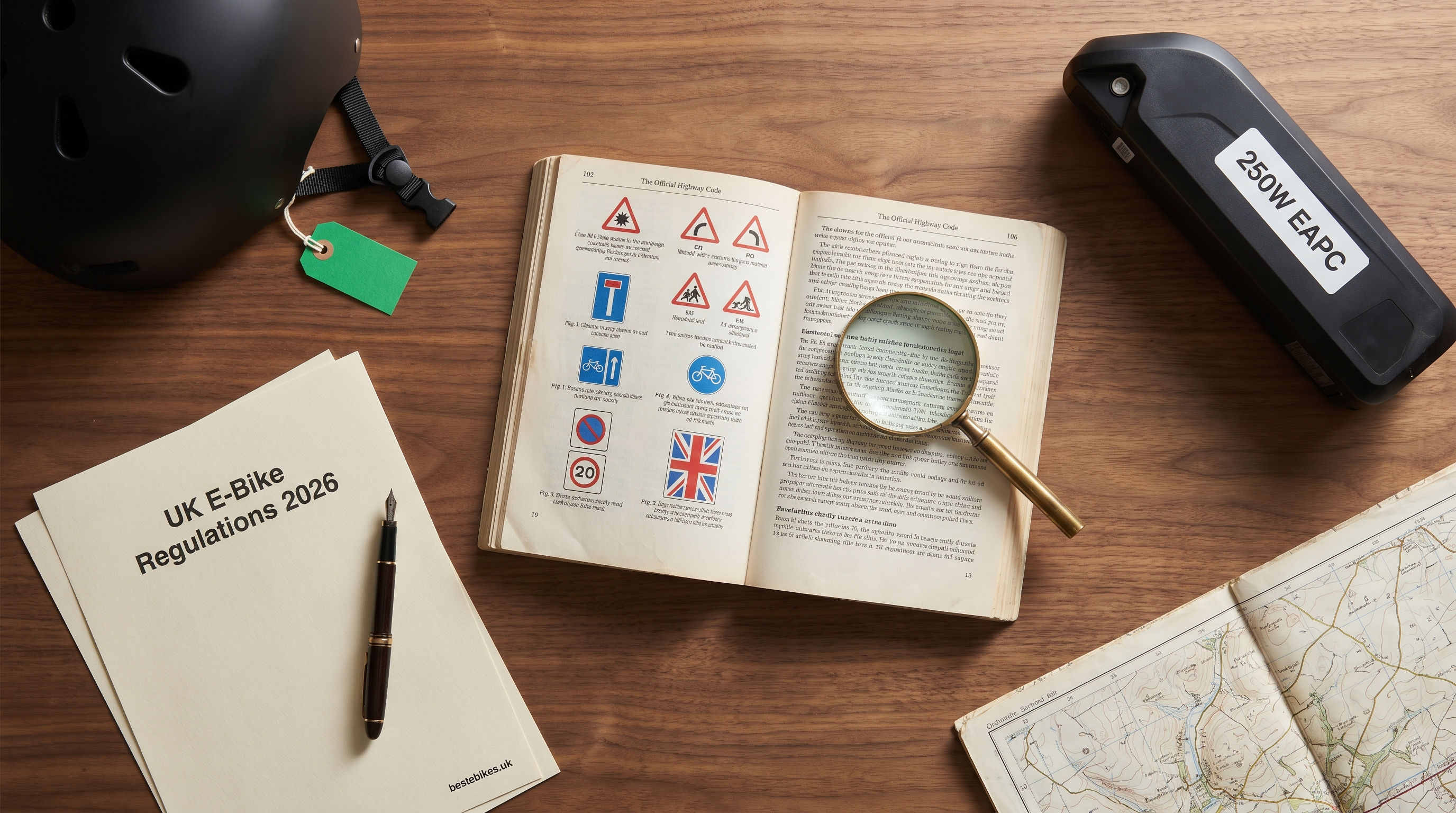
UK E-Bike Law 2026: Everything You Need to Know Before You Ride
I've been riding e-bikes around the UK for over three years now, and one thing I get asked constantly is: "Is my e-bike actually legal?" It's a fair question. The rules aren't exactly plastered on every cycle lane, and there's a lot of misinformation floating around forums and social media. So here's my comprehensive guide to UK e-bike law as it stands in 2026 — what you can ride, where you can ride it, and what could land you in hot water.
The Basics: What Counts as an EAPC?
In the UK, a legal electric bike is officially called an Electrically Assisted Pedal Cycle (EAPC). If your e-bike qualifies as an EAPC, you can ride it anywhere you'd ride a normal bicycle — no licence, no registration, no insurance required. To qualify, your e-bike must meet three criteria:
- Motor power: The continuous rated motor output must not exceed 250 watts.
- Speed limit: The motor must cut off at 15.5 mph (25 km/h). You can pedal faster than that under your own steam, but the motor can't help you beyond that speed.
- Pedal assist only: The motor should only engage when you're pedalling. A walk-assist mode up to 6 km/h (about 3.7 mph) is permitted.
There's also a minimum age requirement of 14 years old, though there's no need to hold a licence or pass any test.
What About Throttle E-Bikes?
This is where things get interesting. Pure throttle e-bikes — ones where you can twist a grip and go without pedalling — exist in a grey area. Strictly speaking, if a bike has a throttle that propels it without pedalling and the motor exceeds 250W or can push past 15.5 mph, it's classified as a motor vehicle. That means you'd need to register it, insure it, tax it, and hold at least a provisional licence.
However, many e-bikes sold in the UK come with a low-speed throttle as a convenience feature. If the throttle only works up to 6 km/h (walking pace) and the bike otherwise meets EAPC rules, you're fine. I use the throttle on my Engwe L20 3.0 Pro to get moving from a standstill on steep hills, and that's perfectly legal.
The Power and Speed Rules in Practice
Here's something that confuses a lot of riders. Many e-bikes, especially those from Chinese manufacturers, advertise peak wattages well above 250W. The key word in the law is continuous rated power, not peak power. A motor rated at 250W continuous can absolutely peak at 500W or more during hard acceleration — and that's legal.
| Classification | Max Motor Power | Max Assisted Speed | Licence Required? | Insurance Required? |
|---|---|---|---|---|
| EAPC (Legal E-Bike) | 250W continuous | 15.5 mph | No | No |
| S-Pedelec / Speed E-Bike | Up to 4kW | 28 mph | Yes (AM licence) | Yes |
| Electric Moped/Motorcycle | Over 4kW | Over 28 mph | Yes (Full) | Yes |
In reality, enforcement is relatively relaxed. Police aren't pulling over every cyclist for a speed check. But if you're involved in an accident on a non-compliant e-bike, you could face serious consequences — riding an unregistered motor vehicle, no insurance, and potentially dangerous driving charges. It's simply not worth the risk.
Where Can You Ride?
A legal EAPC can be ridden anywhere a regular bicycle is allowed: roads, cycle lanes, shared-use paths, and bridleways. You cannot ride on pavements (footways) — that applies to all bikes, electric or otherwise.
One area that catches people out is off-road riding. Bridleways are fine for cycling, but footpaths are not. If you're taking something like the Himiway Escape Pro or the Engwe E26 off-road, stick to bridleways and byways open to all traffic. National Trust and Forestry England land often have their own rules too, so check locally before heading out.
Hub Motors vs Mid-Drive: Does the Law Care?
Short answer: no. The law doesn't distinguish between hub motor bikes like the Engwe N1 Pro and mid-drive setups like the Himiway A7 Pro. As long as you meet the 250W continuous / 15.5 mph cutoff, the motor type doesn't matter. What does matter is whether the motor has been derestricted. Some riders flash their controllers to remove the speed limiter — and while it's tempting, you're turning your EAPC into an unregistered motor vehicle the moment you do it.
E-Bike Modifications: What's Legal?
You can modify your e-bike in many ways without breaking the law. Upgrading brakes, changing tyres, adding lights, fitting a rack — all fine. What you can't do is:
- Derestrict the motor to exceed 15.5 mph assisted speed
- Swap in a motor that exceeds 250W continuous rated power
- Add a throttle that operates above 6 km/h
- Remove the pedals entirely (yes, some people try this)
If you're looking at budget-friendly bikes under £1,000 that are fully road-legal out of the box, something like the Engwe P275 SE at £799 or the Fiido C11 Pro at £950 are solid choices that comply with UK regulations without any worries.
Importing E-Bikes: Watch Out
If you're buying from overseas — particularly from AliExpress or direct from Chinese manufacturers — you need to be careful. Many bikes sold in other markets come with higher-powered motors or no speed limiters. When importing into the UK, the bike must comply with EAPC regulations. Customs may inspect and potentially seize non-compliant electric bikes. Most reputable brands like Engwe, ADO, and Fiido sell UK-specific versions of their bikes with the correct speed limiters and power ratings, so always buy the UK model.
E-Bike Insurance: Optional but Smart
While insurance isn't legally required for an EAPC, I'd strongly recommend it. E-bikes are expensive — the bikes I review on bestebikes.uk range from around £800 to well over £2,000. Specialist e-bike insurance typically costs between £50 and £150 per year and covers theft, accidental damage, and third-party liability. Companies like Laka, PedalSure, and Cycleplan all offer policies tailored to e-bikes. Some home insurance policies will cover e-bikes too, but check the value limits and whether they cover use away from home.
What's Changing in 2026?
There have been ongoing discussions about updating the EAPC regulations. The Department for Transport has been reviewing whether to raise the assisted speed limit to 20 mph, which would bring the UK more in line with the US and some European countries. There's also talk of creating a new lightweight e-moped category that would require basic registration but no full licence. As of April 2026, nothing has been formally enacted, but it's worth keeping an eye on — any changes would open up more options for riders who want a bit more speed without the full moped registration process.
My Advice
Stick to a compliant EAPC and you'll never have a problem. The 15.5 mph limit might feel slow at first, but honestly, in city traffic it's more than enough — and on longer rides, the legal bikes I've tested on this site have all been brilliant. If you're just getting started, browse our full e-bike listings to find something that fits your budget and riding style. Every bike on bestebikes.uk includes full specs so you can verify it meets UK law before you buy.
Ride safe, ride legal, and enjoy the journey.