
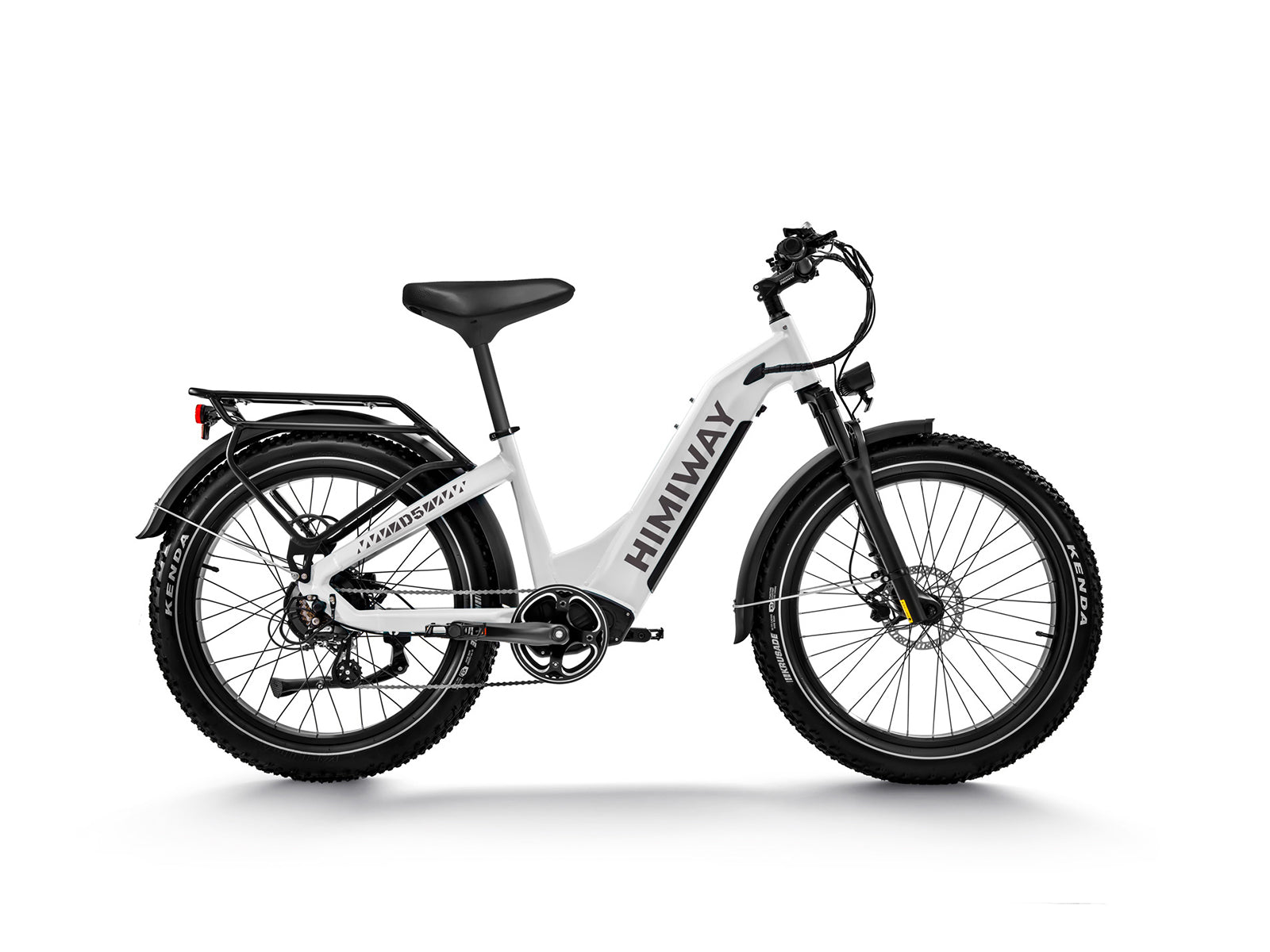
Himiway A7 Pro
$2,499
- Battery
- 720 Wh
- Torque
- 120 Nm
- Weight
- 35 kg (77 lb)
- Motor
- Ananda Mid-Drive
- Charge time
- 7 h
- Frame
- Step Through
- Release
- 13 March 2024
In stock at last check · checked
A torque sensor measures pedalling force and lets the controller vary assistance in response, while a cadence sensor primarily detects whether the cranks are turning. Torque sensing can feel smoother and make it easier to meter assistance, but tuning, motor response and assist levels still differ by bike. The models below are marked as torque-sensor equipped in our catalogue; compare their other specifications and confirm the exact US version with the retailer.
Cheapest with a torque sensor in stock in the US: the Fiido C11 Pro at $1,209. Most torque: the Himiway A7 Pro, 120 Nm at $2,499. Price checked 27 October 2026.
27 eBikes in this category.
$2,499
In stock at last check · checked

$1,209
In stock at last check · checked

$1,499
In stock at last check · checked
$2,199
In stock at last check · checked

$1,499
In stock at last check · checked

$1,599
In stock at last check · checked

$1,599
In stock at last check · checked

$1,899
In stock at last check · checked

$1,599
In stock at last check · checked

$1,209
In stock at last check · checked

$1,429
In stock at last check · checked

$1,999
In stock at last check · checked

$2,499
In stock at last check · checked

$1,499
In stock at last check · checked

$1,699
In stock at last check · checked

$1,399
In stock at last check · checked

$1,649
In stock at last check · checked

$1,899
In stock at last check · checked

$2,299
In stock at last check · checked

$1,649
In stock at last check · checked

$2,499
In stock at last check · checked

$2,599
Out of stock at last check · checked

$1,799
Out of stock at last check · checked

$1,699
Out of stock at last check · checked

$1,599
Out of stock at last check · checked

$1,399
Out of stock at last check · checked
$1,699
Out of stock at last check · checked
The sensor is only half of it: how a bike feels depends as much on controller tuning as on the sensor fitted, and two bikes with the same part can behave very differently. Compare the bikes below on battery, weight and brakes as well, and ride one before deciding — the feel is the thing you are buying and it is the thing a specification cannot show you.
Of the bikes in stock that we list in the US, the cheapest with a torque sensor is the Fiido C11 Pro at $1,209, then the Fiido M1 Pro ($1,209) and the Cyrusher Sprint ($1,399). These are the stores' own prices at our last check. The sensor is one part of the price, so compare battery, weight and brakes on the cards below as well.
A torque sensor measures how hard you push and scales assistance to match, for a natural ride. A cadence sensor only detects that the pedals are turning and applies a fixed boost — simpler and cheaper, but more on/off.
They can use power more progressively, but range also depends on controller tuning, assist level, speed, rider input, load, hills, temperature and battery size. Sensor type alone does not determine range. Their batteries run from 209 Wh to 1,040 Wh, with a median of 720 Wh.
They suit riders who value assistance that responds to pedalling effort. A well-tuned cadence system may still suit a lower budget, so a test ride is the most reliable way to compare the feel.