Why I'd Raise the UK E-Bike Speed Limit to 25 mph (And Why We Still Ride Within 15.5)
If you ride an e-bike in the UK, you know the moment I'm talking about. You're cruising along, the motor humming, life is good — then your speedometer ticks past 15.5 mph and the assist drops away. Suddenly it feels like the brakes have come on. The car behind you, which had been patient at 15, swings out to overtake. You wobble back to 14 mph. The motor catches. Rinse and repeat.
I want to be very clear before I go further: this is an opinion piece, not a how-to. Every e-bike sold and ridden on a UK public road or cycle path must comply with the Electrically Assisted Pedal Cycle (EAPC) rules — 250 W continuous power, pedal assist only, assist cut at 15.5 mph (25 km/h). My bike rides within those limits. So does every bike on this site. But after three years and a few thousand miles on UK roads, I think the limit itself is overdue a conversation.
Where 15.5 Came From — and Why It Feels Too Low Now
The 15.5 mph cap is a direct lift from EU regulation EN 15194. It was set in the 2000s, when e-bikes were a fringe product — heavy, expensive, and aimed mostly at older or less-confident riders who wanted help on hills. In that context it made sense: keep e-bikes squarely in the "bicycle" category, make sure they couldn't be ridden like mopeds, and avoid having to retrain anyone.
Things have changed. E-bikes are now one of the fastest-growing categories of new bicycle sales in the UK. The riders are younger, the bikes are lighter, the batteries last longer, and the use cases have expanded from "easier hills" to full-blown car replacement. Commuters, delivery riders, parents on the school run, people who used to take cabs everywhere — they're all on e-bikes now. The speed cap, designed for a different bike and a different rider, hasn't moved.
The Safety Argument: Matching Pace with Traffic
Here's the bit that surprised me when I started riding seriously. I feel safer on an e-bike not when I'm going slower, but when I'm moving at roughly the same speed as the cars around me.
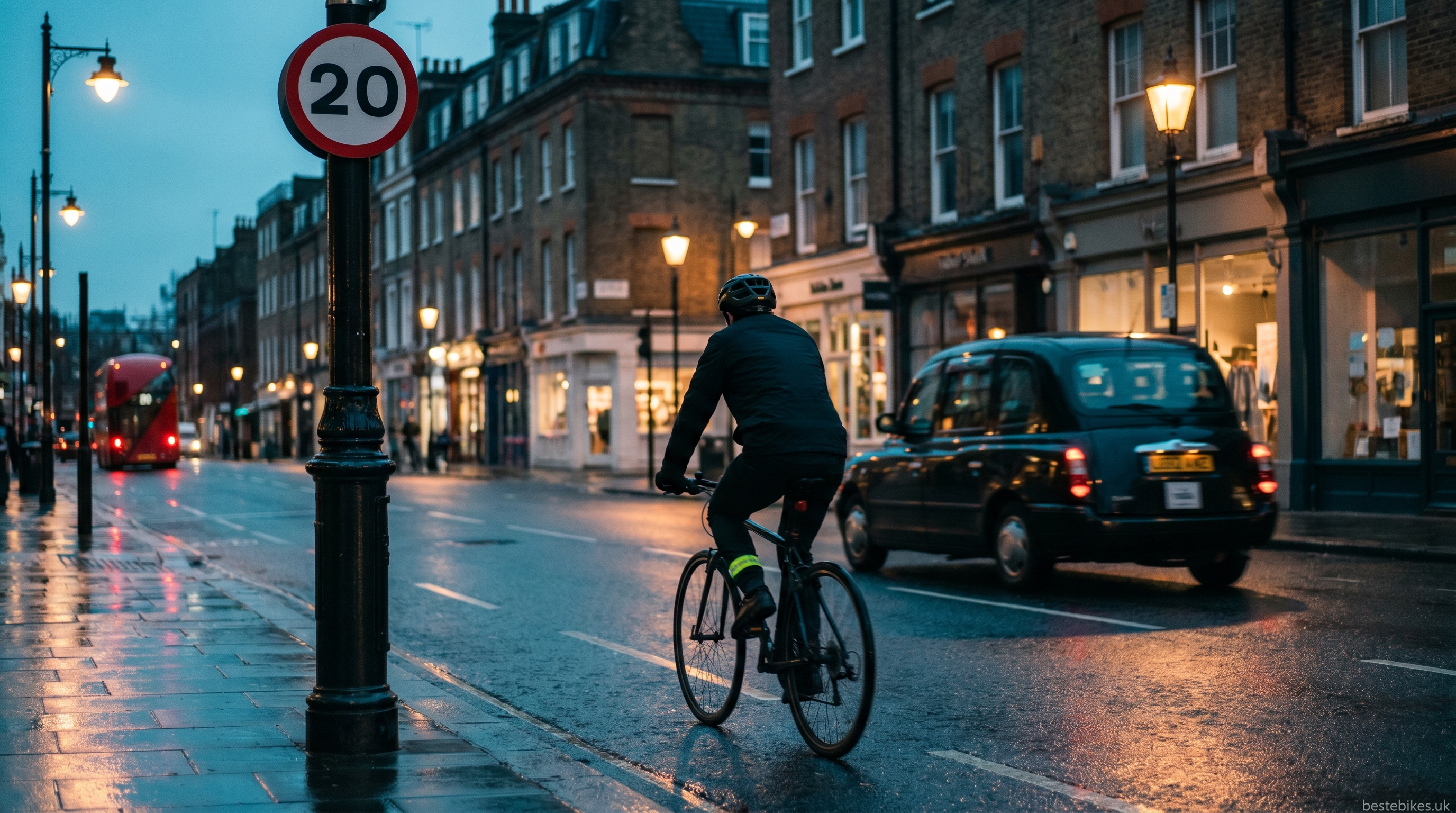
Most of urban London is now a 20 mph zone. So is most of urban Edinburgh, large parts of Manchester, Birmingham, Bristol, and dozens of smaller towns. When I'm capped at 15.5 mph in a 20 mph zone, every single car eventually has to overtake me. Some of them don't bother waiting for a safe gap. The result is a stream of close passes that wouldn't be necessary if I could simply keep pace.
I want to be careful with this claim. I'm describing lived experience, not citing a study. I haven't seen a UK-specific paper measuring overtake frequency at different rider speeds. But the underlying logic — that vehicles travelling at similar speeds need fewer overtaking manoeuvres, and overtaking is when close passes happen — is hard to argue with.
An unassisted road cyclist on a halfway-decent bike sits at 18–22 mph on the flat without breaking much of a sweat. They share the same lanes I do, in the same 20 mph zones, with no speed cap. The current rules create a strange two-tier cycling world where the rider on a 30-year-old aluminium racer can keep up with traffic and the rider on a brand-new e-bike cannot.
Why 25, Not 28?
The US S-Pedelec class allows assist up to 28 mph (45 km/h), and most of mainland Europe permits a similar category with extra rules — helmet, registration, sometimes a licence. I'm not arguing for that. 28 mph on a shared path is genuinely fast, and the energy involved in a collision with a pedestrian rises sharply at that speed.
25 mph feels like the sweet spot. It comfortably matches a UK 20 mph urban zone (giving riders headroom to accelerate up to traffic flow), it sits below the speed where unassisted club cyclists already routinely ride, and it doesn't require entirely new infrastructure or training rules to be sensible.
What a Sensible Reform Could Look Like
I don't think it's as simple as "change the number and walk away". A few things worth thinking about:
- Helmet requirement above a threshold. EAPC bikes don't legally require helmets. If the cap moved to 25 mph, mandating helmets above 20 mph would be a fair trade.
- Lighting and reflective standards. Faster bikes need to be more visible, especially in mixed traffic.
- An optional faster category, not a forced one. Plenty of riders are happy at 15.5 mph. Reform shouldn't force them to upgrade — it should give those who want more, more.
- Shared-path rules. A faster cap on the road shouldn't translate to a faster cap on canal towpaths or shared pavements. Geographic speed zones already exist for cars; they could exist for e-bikes too.
- Training, optional. Not a licence — just a recognised free course (Bikeability already covers similar ground) that nudges faster riders towards good habits.
None of this is settled in my own head. The point is that there is a conversation to have, and right now we're not really having it.
What This Means for Buying a Bike Today
Until the rules change — and they may not, for years — UK e-bike riders have to make the best of 15.5 mph. Here's what I personally prioritise as a result:
- A smooth-tapering assist. A good torque sensor (or, better, a hybrid torque + cadence setup) lets the motor taper off as you approach the cap, instead of slamming off like a switch.
- Decent gearing. If the motor stops helping at 15.5, your legs need somewhere comfortable to go. A 7- or 8-speed cassette with sensible ratios makes a real difference.
- Hydraulic disc brakes. You'll spend more time descending unassisted than you think — brakes that can handle it.
- An unlock option for overseas use. Some bikes ship with a higher assist mode that can be enabled when riding abroad on private land or in countries where higher speeds are legal. We surface this as "Unlockable for overseas use" — it's not relevant for UK road riding, but for riders who tour Europe it's worth knowing about.
For a full breakdown of where you can ride, what you need, and what's legal right now, our 2026 UK e-bike law guide is the better starting point. This piece is the opinionated cousin of that one.
Closing
I'd love to see the UK have a serious conversation about whether 15.5 mph is still the right number for 2026, with everything that's changed about bikes and cities since the rule was written. I think 25 mph, with sensible conditions, would make e-bikes safer and more useful to more people. Until then, we ride within the rules, we recommend bikes that work well within those rules, and we keep saying the quiet bit out loud — because change doesn't happen if nobody talks about it.
— Graham Keane, founder, Best eBikes UK